
In the first half of this chapter James Taylor continues his apologia for poetic knowledge. As he explains on page 74,"The deliberate treatment of poetic knowledge by Maritain and others becomes necessary only after the 17th century and the ascendancy of science as the preeminent method of learning."
It has become needful in our time to advance this lengthy and deep explanation of poetic knowledge because in our hurried society it is seldom experienced. This is nothing new. As a homeschooling mom I frequently experience what Taylor calls connatural learning. What I believe Miss Mason would call the science of relationships or the habit of attention. But as a child my life was regulated by school schedules and the non-stop presence of the TV. I played outside but I never paid attention to nature. I read books but none that made me think. Certainly, electronic entertainment is even more prevalent today and kids frequently have no time to ponder nor anything interesting to ponder if they had the time.
I first read this book a dozen years ago. I don't remember having trouble understanding or following Taylor's definitions and defenses. I was pregnant with my youngest, my oldest was 16. We were preparing to enter the Catholic church. My recollection of this book is positive. I loved the premise and felt that my homeschool was fairly poetic. The girls memorized a lot of poetry, anyway! But re-reading this I realize I really didn't get the full effect of what Taylor is saying here. I'm sure I related it mostly to homeschooling and not to education in general. I now see that this applies to all education and that all children need to begin their education in a poetic mode. Something human is lost when early education is dissected into subjects and facts. I don't see a major overhaul of the public school system happening on this level but it would be awesome if it did. Something along the lines of when my grandmother attended the little one room school with its body of knowledge to be learned. When you could be in the 4th reader but the beginning math book. When you spent two hours of the school day playing. (This is true! A half hour of play in the morning, an hour for lunch and another half hour of play in the afternoon. How much ADHD do you think this would cure today?) The more I read this book the more I am in awe of Charlotte Mason and what she accomplished with her schools! How I wish I had had such an education myself and could recreate it for our stressed nation of school kids!
Tuesday, April 26, 2011

Tuesday, April 19, 2011
Poetic Knowledge Chapter Two/the second half
In this half of the chapter James Taylor wraps up his apologia for poetic knowledge. To be honest, it is pretty tough going in spots! But a few things resonated with me. This quote from page 31 states:"Unlike the scientific mode of learning that proposes methods and systems for acquiring knowledge, the tradition that has been thus far reviewed reveals rather a way of knowledge, like a path or winding road, with interesting detours off the road, more than the super highway of modern education." Now, this sounds like a discription of rabbit trails to me. I love rabbit trails...but I've learned to keep them to summer months or other slow learning times.What Melissa Wiley calls Tidal Homeschooling. This is in keeping with my mentor, Charlotte Mason's advice. In A Philosophy of Education she lays out some guidelines in the introduction that include," There is no selection of studies , or of passages or of episodes, on the ground of interest. The best available book is chosen and is read through perhaps in the course of two or three years." And also this," No stray lessons are given on interesting subjects; the knowledge the children get is consecutive." So in my homeschool I now resist rabbit trails and also stick to a slow schedule of reading. This is harder than it sounds because there is a great temptation to race through good books, and also to feel bogged down in a book, as in, will we be reading about the Kon-Tiki voyage forever?
But this quote from Poetic Knowledge seems to validate Miss Mason's curriuclum,"The pre-Christian audience of the Homeric and Virgilian epics and the unlettered peasants of the Christian pre-modern world could never have grasped, as they did, the spirtiual dimensions of the poets in the first case and the supernatural teaching of the apostles and disciples in the second, had they not already read deeply in the book of nature." I chose to believe this gives me licsence to take time off when the weather or the mood (oh, but don't call it a rabbit trail!) hits us to tramp outside for nature study. It is the keystone to all learning!
James Taylor goes on to discribe monastic learning and this quote about Saint Thomas Aquinas struck me,"Certainly to be considered is the fact that Thomas was placed with the Benedictines of Monte Cassino at an early age. This would have been largely a musical education in all the respects spoken of by Socrates. Music was all the monks taught young boys, the Latin and chant of the schola cantorum, a school of song drawn from Psalms and history of the Old Testament..." I confess, here is an area where I feel our homeschool is realy lacking. We dabble in singing folksongs and the odd Latin chant but it has no consitency. My music ability is sadly non existant and I never could go much beyond F A C E or E G B D F in reading music, so this beyond my ability to teach. The hobbits have chosen sports over music lessons so I have to let this subject go. Alas.
But this quote from Poetic Knowledge seems to validate Miss Mason's curriuclum,"The pre-Christian audience of the Homeric and Virgilian epics and the unlettered peasants of the Christian pre-modern world could never have grasped, as they did, the spirtiual dimensions of the poets in the first case and the supernatural teaching of the apostles and disciples in the second, had they not already read deeply in the book of nature." I chose to believe this gives me licsence to take time off when the weather or the mood (oh, but don't call it a rabbit trail!) hits us to tramp outside for nature study. It is the keystone to all learning!
James Taylor goes on to discribe monastic learning and this quote about Saint Thomas Aquinas struck me,"Certainly to be considered is the fact that Thomas was placed with the Benedictines of Monte Cassino at an early age. This would have been largely a musical education in all the respects spoken of by Socrates. Music was all the monks taught young boys, the Latin and chant of the schola cantorum, a school of song drawn from Psalms and history of the Old Testament..." I confess, here is an area where I feel our homeschool is realy lacking. We dabble in singing folksongs and the odd Latin chant but it has no consitency. My music ability is sadly non existant and I never could go much beyond F A C E or E G B D F in reading music, so this beyond my ability to teach. The hobbits have chosen sports over music lessons so I have to let this subject go. Alas.
Monday, April 18, 2011
The Smitten Kitchen
The Smitten Kitchen is my new favorite wabsite! The photography is outstanding. I can personally vouch for the deliciousness of the Oat and Maple Syrup Scones. As soon as Lent is over(and it's almost over!) I plan to try Coconut Milk Fudge.Yum!Just the thing for Hobbits celebrating Easter!
Tuesday, April 12, 2011
Poetic Knowledge Week Two
I am totally distracted this week by the arrival of the world's most delectable baby--my first grandchild. He is amazing. Really! And I am obviously besotted. My apologies.
But I did want to note this quote from Chapter Two-"But the first experiences in the poetic mode will never be forgotten, nor rejected, as if one had outgrown them and found them silly." pg.15
This has been true for my three older children who have gone out into the world. They have not embraced the silliness of the world but have held fast to what they learned in those long, dreamy days of homeschooling. People occasionally ask me what is the most important aspect of homeschooling. I say time. Time to think and dream, read, play, draw, bake cookies, make chainmail, watch ants, you get the idea.
But I did want to note this quote from Chapter Two-"But the first experiences in the poetic mode will never be forgotten, nor rejected, as if one had outgrown them and found them silly." pg.15
This has been true for my three older children who have gone out into the world. They have not embraced the silliness of the world but have held fast to what they learned in those long, dreamy days of homeschooling. People occasionally ask me what is the most important aspect of homeschooling. I say time. Time to think and dream, read, play, draw, bake cookies, make chainmail, watch ants, you get the idea.
Monday, April 11, 2011
Hobbit Uncles!

The hobbits are uncles and I am a grandma! The teeniest hobbit was born last Wednesday! We are all very much in love!
Tuesday, April 5, 2011
Poetic Knowledge Chapter One
This chapter is called The Validity of Poetic Knowledge and I think Mr. Taylor makes a good argument for the urgent need of this kind of education today. He says,"Poetic knowledge is a kind of natural, everyman's metaphysics of common knowledge." What I took away from this chapter is a hint of what we've lost or more accurately let atrophy. I think all people have poetic souls but Taylor is very correct when he states,"Given that the scientific idea of education is a mechanical model that manifests itself in some from of the "drill and kill" system, and given, in contrast, that the human being is not a machine the conflict produced by the imposition of the scientific idea of learning will also have its negative effect on the emotional life of the learner." I see the "poetry" of so many children lying dormant and unused, even damaged by our current school system. Locally, this system is geared to the high achievers and it doesn't take long for a student to fall behind and be put in remedial classes or even shunted off to the local vo-tech school. I see the value of vocational training but I feel these kids are being given short shrift. We still suffer from what Charlotte Mason describes in School Education, "Our aim in education is to give children vital interests in as many directions as possible--to set their feet in a large room--because the crying evil of our day is, it seems to me, intellectual inanition." It seems that way to me, too.
It's not hard to establish poetic learning in our homeschools. It is usually the natural progression of our days. I think Charlotte Mason has a good blend of poetic learning with rigorous study (we don't learn Latin by drifting around a Latin Reader, we memorize forms!) but how to save our friends? How to promote this way of learning which Miss Mason says in A Philosophy of Education,"Children, I think all children, so taught express themselves in forcible and fluent English and use a copious vocabulary. An unusual degree of nervous stability is attained; also, intellectual occupation seems to make for chastity in thought and life. Parents become interested in the schoolroom work, and find their children "delightful companions." Children shew delight in books (other than story books) and manifest a genuine love of knowledge." There is a promise of healing in these words.
It's not hard to establish poetic learning in our homeschools. It is usually the natural progression of our days. I think Charlotte Mason has a good blend of poetic learning with rigorous study (we don't learn Latin by drifting around a Latin Reader, we memorize forms!) but how to save our friends? How to promote this way of learning which Miss Mason says in A Philosophy of Education,"Children, I think all children, so taught express themselves in forcible and fluent English and use a copious vocabulary. An unusual degree of nervous stability is attained; also, intellectual occupation seems to make for chastity in thought and life. Parents become interested in the schoolroom work, and find their children "delightful companions." Children shew delight in books (other than story books) and manifest a genuine love of knowledge." There is a promise of healing in these words.
Monday, April 4, 2011
Poetry Monday
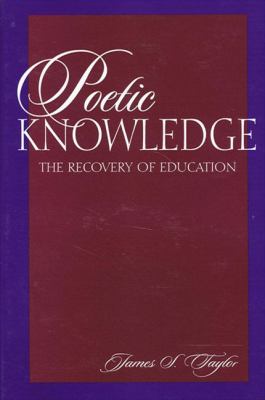
Or rather Poetic Monday. I'm excited to be joining the discussion of one of my favorite books on education, Poetic Knowledge by James S. Taylor. The discussion is being hosted by Mystie at A Healer's Geste ( a very interesting blog to wander through, I might add) and starts tomorrow with chapter one!
Subscribe to:
Posts (Atom)